
Understanding Electropolished Tubes in Semiconductor Manufacturing
Selecting the right electropolished (EP) tube for your semiconductor process is critical to maintaining ultra-high-purity (UHP) standards and ensuring contamination-free operation. With chip manufacturing advancing to sub-5nm nodes, the demand for high-purity electropolished tubing has never been higher. This comprehensive guide walks you through the essential selection criteria to optimize your semiconductor fluid delivery systems.
What Makes EP Tubes Essential for Semiconductor Fabs?
The Electropolishing Advantage
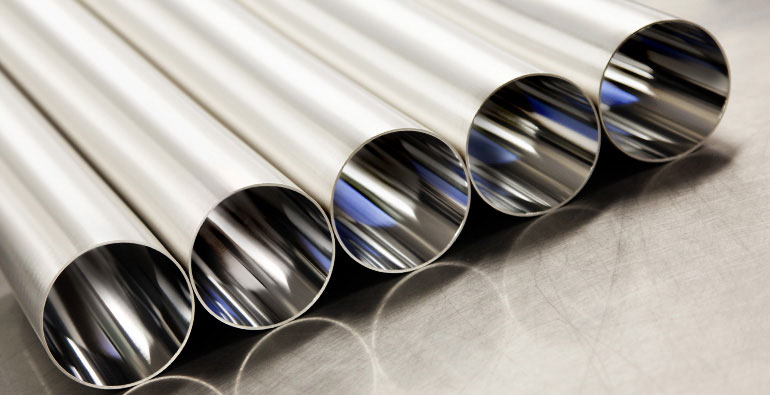
Electropolished stainless steel tubing undergoes a specialized surface treatment that removes microscopic surface imperfections, creating a mirror-smooth finish with surface roughness typically below 15 micro-inches Ra (0.38 microns). This process offers several critical benefits:
- Reduced particle generation – Smooth surfaces minimize contamination risks
- Enhanced corrosion resistance – Removes embedded iron and surface contaminants
- Improved chemical compatibility – Better resistance to aggressive process chemicals
- Lower TOC (Total Organic Carbon) – Minimizes organic contamination in UHP applications
- Easy cleaning and passivation – Simplified maintenance protocols
Key Selection Criteria for Semiconductor EP Tubes
Material Grade and Purity Level
316L stainless steel EP tubing remains the industry standard for most semiconductor applications due to its excellent corrosion resistance and low carbon content. For ultra-critical processes, consider:
- 316L-VAR (Vacuum Arc Remelted) – Enhanced purity for the most demanding applications
- 316Ti – Improved weld characteristics for orbital welding systems
- Alloy 625 – Superior chemical resistance for aggressive environments
Surface Finish Specifications
Not all electropolishing is created equal. UHP electropolished tubes should meet these surface finish requirements:
- Surface Roughness: ≤15 μ-inch Ra (≤0.38 μm Ra)
- ASTM A269/A270 compliance for seamless tubing
- SEMI F19 and F57 certification for wetted materials
- Class 10-100 cleanroom compatibility
Tube Dimensions and Wall Thickness
Semiconductor gas line tubing and chemical delivery systems require precise sizing:
- Common OD sizes: 1/4″, 3/8″, 1/2″, 3/4″, 1″
- Wall thickness: 0.035″, 0.049″, 0.065″ (based on pressure requirements)
- Length considerations: Standard 20-foot lengths or custom cuts
- Straightness tolerance: Critical for automated assembly
Tube Dimensions and Wall Thickness
Evaluate your process parameters:
- Common OD sizes: 1/4″, 3/8″, 1/2″, 3/4″, 1″
- Wall thickness
- Operating pressure range – Typically 0-150 psi for chemical delivery, up to 3000+ psi for gas systems
- Temperature extremes – From cryogenic to 400°F+ for various processes
- Pressure cycling – Fatigue resistance for systems with frequent pressure changes
Purity Documentation and Certification
High-purity tubing certification should include:
- Material test reports (MTR) – Chemical composition verification
- Surface roughness measurements – Profilometer certification
- Particle count testing – Per SEMI standards
- Extractables analysis – Ion chromatography results
- Passivation certificates – Proving chromium oxide layer integrity
Application-Specific EP Tube Selection
Chemical Delivery Systems
For photoresist delivery tubing and wet chemical lines:
- Use 316L EP tubing with Ra ≤10 μ-inch
- Consider PTFE-lined options for extremely aggressive chemistries
- Verify compatibility with solvents, acids, and bases
Ultra-High-Purity Gas Distribution
UHP gas distribution tubing for CVD, ALD, and epitaxy requires:
- 316L-VAR material for lowest metallic contamination
- Orbital welded connections to eliminate threaded joints
- VCR fittings or other metal gasket face seal connections
- Full traceability with heat lot numbers
Slurry and Abrasive Applications
For CMP (Chemical Mechanical Planarization) systems:
- Enhanced wall thickness for abrasion resistance
- Superior electropolish to prevent particle entrapment
- Regular replacement schedules based on wear monitoring
Vacuum Systems
Semiconductor vacuum tubing considerations:
- Minimal outgassing characteristics
- Vacuum-rated fittings and flanges
- Leak rates below 1×10⁻⁹ std cc/sec helium
Application-Specific EP Tube Selection
Compliance Standards You Must Know
Industry Standards for EP Tubes
- SEMI F19 – Classification and Chemical Analysis of High-Purity Water
- SEMI F57 – Specifications for Polished Stainless Steel Components
- ASTM A269 – Seamless and Welded Austenitic Stainless Steel Tubing
- ASTM A270 – Seamless and Welded Austenitic Stainless Steel Sanitary Tubing
ISO 9001 & ISO 14001 – Quality and environmental management
Installation and Maintenance Best Practices
Proper Handling of EP Tubes
- Store in sealed, cleanroom-compatible packaging
- Use lint-free gloves during installation
- Protect tube ends with clean caps until connection
- Avoid contact with carbon steel tools that could cause cross-contamination
System Passivation
After installation, stainless steel passivation for semiconductors should include:
- Citric acid or nitric acid passivation treatments
- Flow-through cleaning procedures
- Verification via water break test
- Documentation of passivation process parameters
Cost vs. Performance Considerations
While premium EP tubing costs more upfront, consider total cost of ownership:
- Reduced downtime from contamination events
- Extended service life with proper maintenance
- Higher yields from improved process control
- Lower particle defect rates saving millions in scrapped wafers
Common Mistakes to Avoid
- Under-specifying surface finish – Choosing standard EP instead of UHP grade
- Ignoring wall thickness – Leading to premature failure or excessive pressure drop
- Mixing incompatible materials – Causing galvanic corrosion
- Skipping passivation – Compromising long-term performance
- Inadequate documentation – Failing traceability requirements
Future Trends in EP Tube Technology
As semiconductor manufacturing pushes toward 2nm nodes and beyond, expect:
- Even stricter purity requirements with sub-10 Ra finishes
- Advanced alloys with enhanced chemical resistance
- IoT-enabled smart tubing with contamination monitoring
- Sustainable manufacturing processes with reduced environmental impact
Conclusion
Choosing the right electropolished tube for semiconductor applications requires careful evaluation of material grade, surface finish, dimensional accuracy, and compliance certifications. By understanding your specific process requirements and selecting EP tubing that meets or exceeds industry standards, you’ll ensure reliable, contamination-free operation that supports your fab’s productivity and yield goals.
Partnering with experienced semiconductor tubing suppliers who provide complete documentation, technical support, and custom solutions will give you the competitive edge in today’s demanding semiconductor manufacturing environment.