
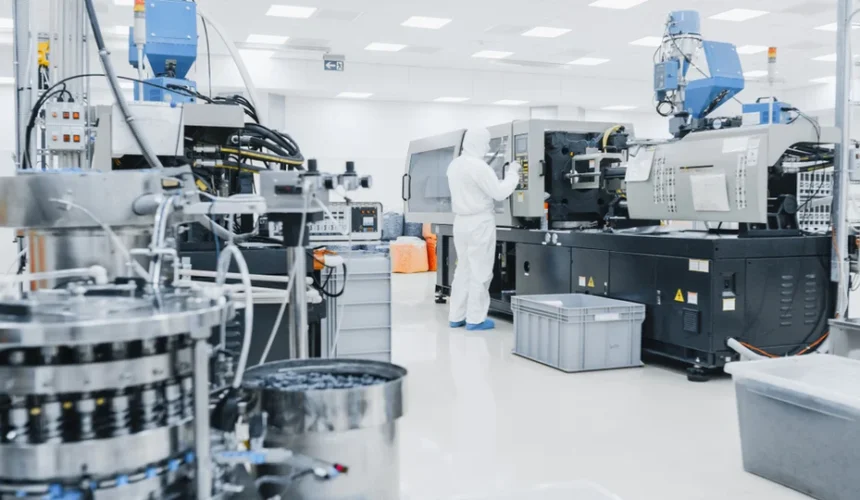
High-Purity Semiconductor Tubing Systems
In the ultra-precise world of semiconductor fabrication, semiconductor manufacturing tubes and fittings serve as the backbone of chemical delivery and gas distribution systems. These critical components ensure contamination-free processing in cleanroom environments where even microscopic impurities can compromise entire production batches worth millions of dollars.
Why Material Selection Matters in Semiconductor Applications
PTFE and PFA Tubing for Chemical Resistance
High-purity PTFE tubing and PFA semiconductor tubing dominate the industry due to their exceptional chemical resistance and ultra-low particle generation. These fluoropolymer materials withstand aggressive chemicals including hydrofluoric acid, sulfuric acid, and photoresist solvents commonly used in wafer processing.
Stainless steel semiconductor fittings (specifically 316L grade) provide robust connections for high-pressure gas delivery systems, offering superior strength while maintaining the purity standards required in fab environments.
Ultra-High-Purity (UHP) Requirements
UHP gas delivery systems demand fittings and tubing that meet stringent cleanliness specifications. Electropolished stainless steel fittings reduce surface roughness to below 15 micro-inches Ra, minimizing particle traps and contamination risks in critical applications like chemical vapor deposition (CVD) and atomic layer deposition (ALD) processes.
Key Components in Semiconductor Fluid Systems
Essential Fitting Types
- Orbital welded fittings – Provide leak-tight, contamination-free connections for permanent installations
- VCR fittings for semiconductors – Metal gasket face seal fittings ideal for high-purity gas applications
- Compression fittings – Quick-connect solutions for flexible tubing in chemical delivery lines
- Diaphragm valves – Ultra-clean shutoff devices with minimal dead volume
Tubing Specifications for Fab Environments
Cleanroom-compatible tubing must meet Class 10 to Class 100 specifications, with documentation proving low extractables, minimal outgassing, and particle generation below acceptable thresholds. Common size ranges include 1/4″, 3/8″, and 1/2″ OD for process chemical lines, while semiconductor gas distribution tubing typically uses smaller diameters for precise flow control.
Industry Standards and Compliance
SEMI Standards for Tubing and Fittings
The SEMI F57 standard governs the purity requirements for wetted materials in semiconductor processing equipment. Compliance ensures that tubes and fittings won’t introduce metallic ions, organic contaminants, or particles that could affect device yield.
ISO Class cleanroom ratings determine the acceptable particle counts in manufacturing environments, directly influencing the selection criteria for all fluid handling components.
Applications Across the Fab
Critical Process Areas
- Photolithography chemical delivery – Requires PTFE/PFA tubing resistant to photoresist chemicals and developers
- Etching systems – Demand corrosion-resistant materials for plasma and wet etch processes
- Deposition equipment – Utilize UHP gas fittings for precursor delivery in CVD and ALD tools
- CMP (Chemical Mechanical Planarization) – Needs abrasion-resistant tubing for slurry distribution
Selection Criteria for Optimal Performance
When choosing semiconductor process tubing and fittings, engineers must evaluate:
- Chemical compatibility with process fluids
- Pressure and temperature ratings for operating conditions
- Purity certification and traceability documentation
- Installation method (welded vs. mechanical connections)
- Total cost of ownership including maintenance and replacement cycles
Emerging Technologies
Advanced semiconductor nodes below 7nm require even stricter contamination control. EUV lithography systems and advanced packaging processes drive demand for next-generation ultra-pure fluid handling solutions with enhanced performance characteristics.
Conclusion
Semiconductor manufacturing tubes and fittings represent far more than simple plumbing components. They’re precision-engineered systems that enable the production of cutting-edge microchips powering everything from smartphones to artificial intelligence. By selecting the right materials, maintaining rigorous cleanliness standards, and following industry best practices, semiconductor manufacturers can ensure optimal process performance, maximum uptime, and superior product yields.
Investing in quality high-purity semiconductor tubing systems and cleanroom-rated fittings is not just a technical requirement—it’s a strategic decision that directly impacts manufacturing efficiency and product quality in one of the world’s most demanding industries.
Frequently Asked Questions (FAQs)
01.
What is the best tubing material for high-purity semiconductor chemical delivery systems?
02.
What are VCR fittings and why are they used in semiconductor gas delivery systems?
03.
What standards must semiconductor tubing and fittings comply with?
04.
Why is electropolished 316L stainless steel used in UHP gas systems?
05.
How do you select the right semiconductor manufacturing tubes and fittings?
Chemical compatibility with process fluids
Pressure and temperature ratings
Cleanroom and UHP certification
Installation method (orbital welding vs. mechanical fittings)
Long-term reliability and total cost of ownership
Proper selection ensures maximum yield, minimal contamination risk, and optimal performance in advanced semiconductor fabrication facilities.